

Article: Scalp Massager vs Fingers: Which Should You Use?
Scalp Massager vs Fingers: Which Should You Use?
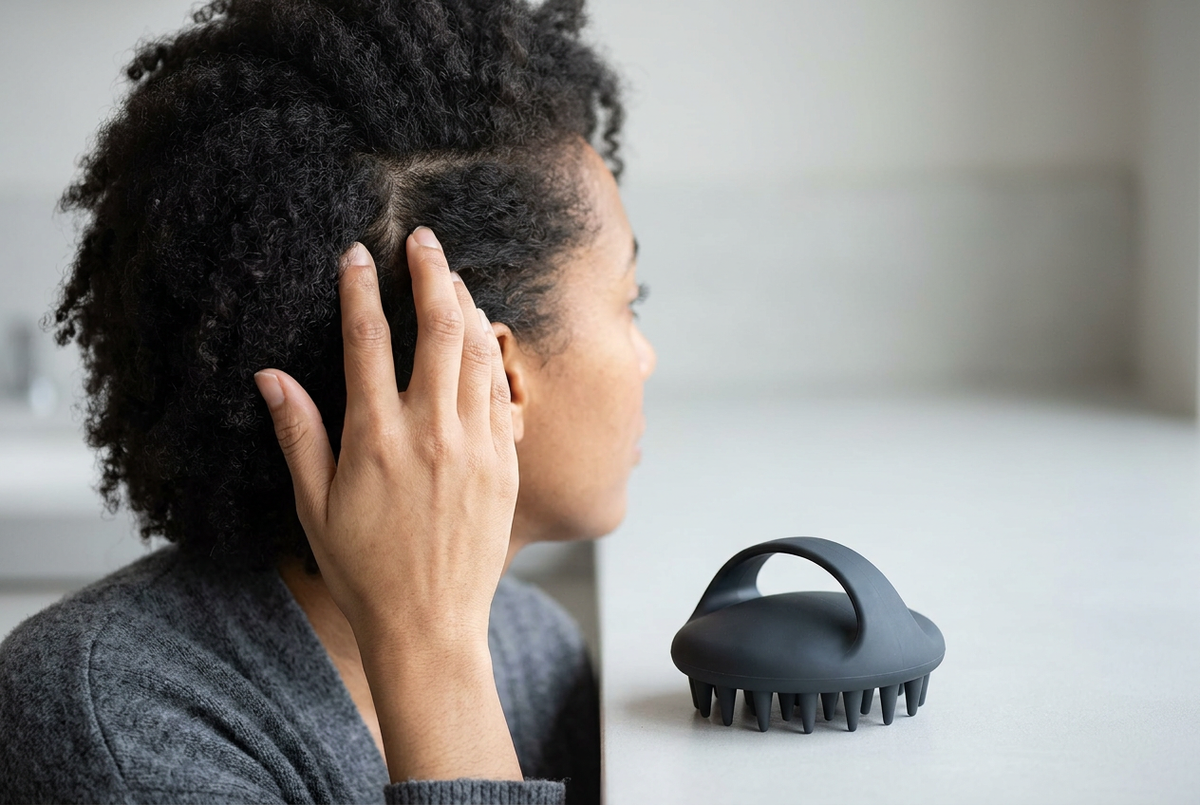
Scalp massager vs fingers is mainly a choice about control and convenience. Fingertips let you adjust contact directly without buying a tool; a massager adds a particular contact surface or powered motion. Neither option automatically delivers better hair growth. Choose the approach you can position comfortably, keep gentle, and stop easily.
Key Takeaways
- Start with the task: Fingertips may be enough for gentle contact; a device should solve a specific handling preference.
- Control still matters: With a brush or powered head, you remain responsible for placement, pressure, and noticing discomfort.
- Skip improvised tools: You do not need to make a homemade massager to try gentle contact with clean fingertips.
- Separate comfort from regrowth: A pleasant sensation, stronger pressure, or a motor does not establish a hair-growth benefit.
Fingertips and Scalp Massagers at a Glance
Fingertips offer direct touch and no separate equipment. A manual brush changes the contact surface, while an electric device supplies its own motion. The practical differences below can help you decide whether a tool adds something useful to your routine.
| What you are comparing | Fingertips versus a tool |
|---|---|
| Contact and feedback | Fingertips let you feel the contact directly. A tool places its tips or head between your hand and scalp, so check placement and sensation carefully. |
| Movement | Your hand creates fingertip or manual-brush motion. An electric head supplies movement, but you still position and hold it. |
| Hand effort | Fingertips require repeated hand movement. A tool changes the grip and may add weight; powered motion does not make every device easier to hold. |
| Upkeep | Clean hands need no separate accessory care. A brush needs cleaning and drying; an electric device also brings charging and housing restrictions. |
| Cost and setup | Fingertips require no purchase. A tool adds a purchase and model-specific instructions, so identify the practical reason for adding it. |
| Hair-growth claims | Neither the contact surface nor a motor proves superior regrowth. Assess evidence separately from comfort and convenience. |
What Control Do Fingertips Provide?
Fingertips let you change the contact area, movement, and pressure immediately. You can move your fingers apart to work around a small part rather than fitting a fixed brush head into it. This can be a useful starting point when you are deciding what feels manageable.
Use clean hands and the pads of your fingers rather than your nails. Begin with light contact on an accessible area and keep movements small. Do not scrape, pull hair, or press harder to create a stronger sensation. If reaching an area requires an awkward grip or causes discomfort, leave it alone.
Direct touch is not an automatic safeguard. Fingers can still scratch or apply excessive pressure, especially if you treat discomfort as a sign that massage is working. You do not need to follow a research study’s timing or work over every part of the scalp.

When Might a Scalp Massager Be Useful?
A tool may suit you if you prefer its grip, contact surface, or built-in movement. Those are practical preferences rather than proof that it is better than fingers. Check whether you can place the head, stop it, and lift it away without pulling hair or straining your hand.
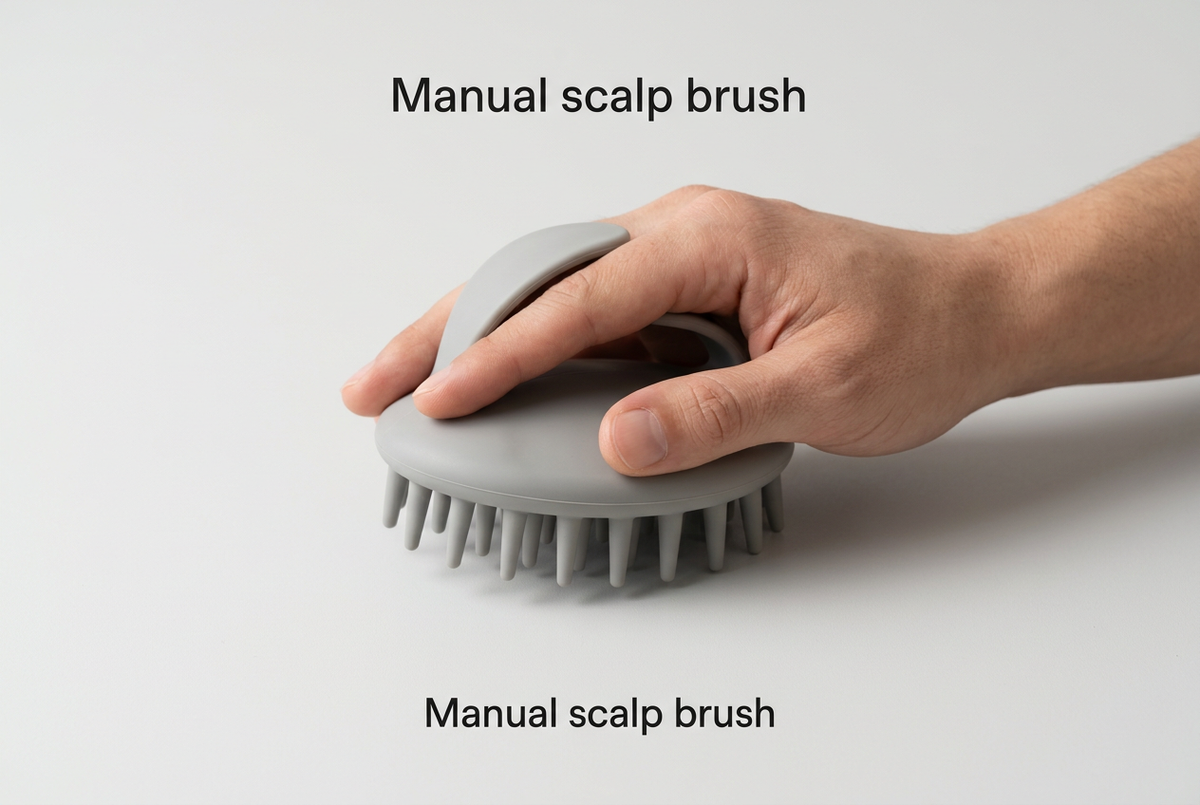
A manual brush still depends on your hand to create the motion. An electric massager changes that part of the task while adding controls, weight, and maintenance. Our comparison of manual and powered movement explains those differences without treating either design as a regrowth treatment.
If you prefer a manual option, compare bristle flexibility, grip, and cleaning access. For any device, follow its own instructions about dry or wet use. A brush designed for shampooing does not establish that another tool can be used in the shower.
Does Your Hair Make One Option Easier to Position?
Choose according to the space you can comfortably reach, not an “all hair types” label. Fingers may fit a small part more easily than a particular brush head, but either method needs access without tugging. If dense roots are the obstacle, start with gentle sectioning for curly and thick hair.
Long strands create a different handling issue: they need to stay clear of a tool as you move it. Review lifting and repositioning without dragging through long hair if you choose a massager. Neither fingers nor a scalp brush should be used to force through knots.
Do You Need a Homemade Scalp Massager?
No. For someone seeking a simple substitute for a scalp massager, clean fingertips are an option that requires no construction. If you are searching for how to make a scalp massager, consider whether the goal is simply gentle, controllable contact before adding another object to the routine.
A homemade scalp massager made from household objects may have rough edges, narrow contact points, or parts that catch hair. Avoid improvised wire prongs, sharp objects, and motorized assemblies. This is not a reason to buy a device: you can use gentle fingertip contact or skip massage if it is uncomfortable.
Is a Scalp Massager Better Than Fingers for Hair Growth?
The research discussed here does not establish that a device is better than fingers. A small study cannot answer every comparison between tools, manual techniques, and hair-loss conditions. Keep the outcome measured in the study separate from the benefit you hope to obtain.
| Source and finding | What it can and cannot establish |
|---|---|
| 2016 standardized scalp-massage study: nine healthy men used a device for four minutes daily over 24 weeks; the abstract reported increased hair thickness from baseline. | The published figure captions report no significant thickness difference between the massage and control areas. This was not a device-versus-fingertips comparison and does not establish superior regrowth or a treatment for hair loss. |
| AAD guidance on shedding and hair loss: a dermatologist can distinguish the two and investigate their causes. | Choosing a massage method cannot identify why hair is thinning. Seek assessment if that is your main concern rather than treating stronger contact as a solution. |
Hair thickness, hair density, and regrowth are different outcomes. Do not copy the study’s four-minute routine as a universal instruction for fingers or a purchased device. Choose a tool for its practical role, and evaluate any hair-growth claim using evidence that matches the actual intervention and outcome.
When Should You Stop Either Method?
Stop if you notice pain, pulling, scratching, burning, or irritation. Avoid working over broken or sore skin. If a scalp condition or recent procedure makes you unsure whether massage is suitable, ask a clinician familiar with your situation before continuing.
The NCCIH guidance on massage safety advises against using massage to delay medical assessment. It covers massage generally, not approval of a particular scalp technique or device. Neither fingertips nor a tool should replace care for persistent scalp symptoms.
Frequently Asked Questions
What control do fingertips provide?
They let you adjust the contact area, pressure, and movement directly, without fitting a fixed head between the hair. Use the finger pads rather than nails, keep contact gentle, and stop if it scratches, pulls, or hurts. Direct touch does not justify stronger pressure.
Does a device prove better hair-growth results?
No. A motor, brush shape, or stronger sensation is not evidence of better regrowth. The small study discussed above did not compare a device with fingertip massage. Hair-loss concerns need an assessment of their cause, not just a choice between massage methods.
Can fingertips replace a homemade massage tool?
Yes, if your aim is gentle contact that you can comfortably control. Clean fingertips remove the need to construct a tool from household objects. Avoid improvised sharp or motorized tools, and skip massage if even light contact is uncomfortable.
Choose the Method You Can Control Comfortably
Start with what you need from the routine: direct touch, a different grip, or powered movement. Fingers may already meet that need. If you decide a device would add value, use our guide to choosing a scalp massager for your routine to check fit, controls, and upkeep before buying.


Leave a comment
This site is protected by hCaptcha and the hCaptcha Privacy Policy and Terms of Service apply.