

Scalp Massagers for Curly and Thick Hair
A scalp massager for curly hair should reach your scalp through a gentle part without tugging at the surrounding curls. For thick or densely packed hair, comfortable contact depends on sectioning, tip design, and controlled placement. Start with an accessible area, follow the tool’s instructions, and stop if it pulls.
Key Takeaways
- Part before pressing: Open a manageable section so the tips reach your scalp without pushing through a cushion of curls.
- Check the whole head: Rounded tips, suitable spacing, and a controllable grip matter more than long bristles alone.
- Respect your hairstyle: Around braids or locs, use only accessible scalp areas; skip any spot that requires moving or pulling roots.
- Match the tool to the routine: A shampoo brush’s wet-use instructions do not apply to a dry-use electric massager.
Why Do Curly and Thick Hair Need a Different Approach?
Curls can sit between the massage tips and your scalp, so a tool may move your hair without making comfortable skin contact. Pressing harder does not solve that placement problem. Opening a small part gives you a clearer place to position the tool and check how it feels.
“Thick hair” can describe coarse individual strands, a high density of strands, or both. Curl pattern is another factor. A scalp massager for thick hair therefore needs to suit the space you can comfortably create at the roots, rather than simply carrying an “all hair types” label.
The British Association of Dermatologists’ guidance on Afro-textured hair explains that tightly curled hair is vulnerable to dryness, knotting, and breakage. That makes gentle handling especially relevant when positioning a tool between curls. The aim here is comfortable scalp access, not changing hair density.
What Makes a Scalp Massager Suitable for Dense Curls?
Look for tips that feel comfortable on your scalp, enough space to position them without trapping nearby strands, and a handle you can control. The best scalp massager for thick hair is a practical fit for your roots and routine; extra firmness or longer bristles alone do not establish that fit.
| Feature | What to check |
|---|---|
| Tip shape and softness | Look for smooth, rounded contact points. On a manual brush, flexible tips should feel comfortable without requiring a hard push. |
| Tip spacing | Check whether strands have room between the tips in your chosen section. Crowded contact points can make placement harder. |
| Tip length and head size | The tips should reach the exposed scalp without the base pressing into surrounding hair. The head must fit the area you can access. |
| Grip and controls | You should be able to place, stop, and lift the tool easily. For an electric model, check how its lowest setting works. |
| Permitted use | Check dry or wet use, cleaning instructions, and any restrictions for braids, extensions, or other hairstyles before buying. |
Wider spacing is a useful feature to assess, but no single spacing measurement suits every curl pattern and hairstyle. Check the tool against an actual part in your hair. If reaching the scalp means compressing the hair or pressing firmly, change the section or choose another approach.
For a manual scalp brush, compare bristle flexibility, spacing, and grip together rather than choosing by tip length alone.
For a broader comparison of movement, controls, and maintenance, read our guide to choosing an electric scalp massager.
How to Reach the Scalp Through Dense Curls
Work through small, manageable sections and check contact before adding movement. You do not need a fixed number of sections: use enough that you can reach the scalp without holding the surrounding hair under tension. These placement checks complement the instructions supplied with your particular tool.
1. Keep Detangling Separate From Massage
A scalp massager is not a substitute for a detangling tool. If knots prevent you from making a gentle part, address them as part of your normal hair-care routine before attempting scalp massage.
The American Academy of Dermatology’s curly-hair guidance recommends working in sections and using water, conditioner, and suitable fingers or tools when detangling. That advice concerns detangling hair; it does not mean an electric scalp massager can be used on wet hair. Follow the device’s separate requirements.
2. Open a Part You Can Hold Comfortably
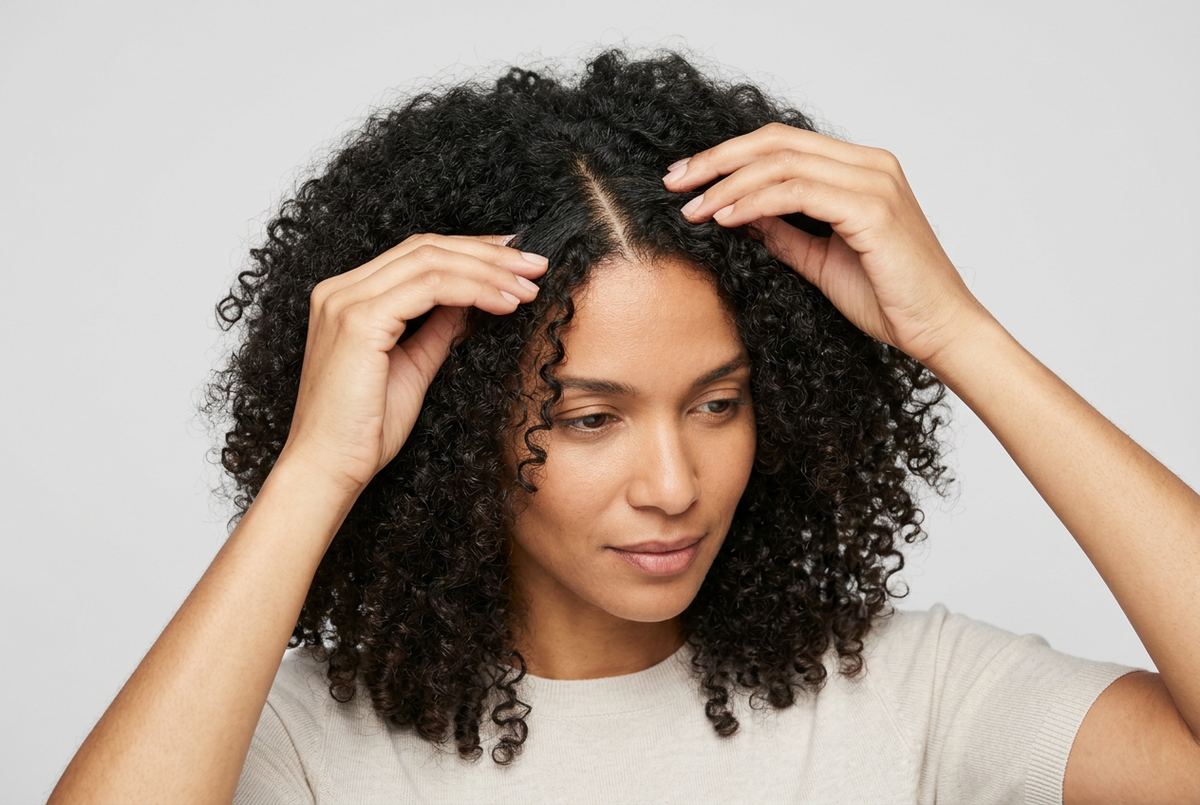
Use your fingertips to separate a small area at the roots, then loosely keep the surrounding curls to either side. Avoid stretching the section tight. If clips help, place them away from the intended contact area so the tool cannot catch them.

3. Check Contact Before Movement
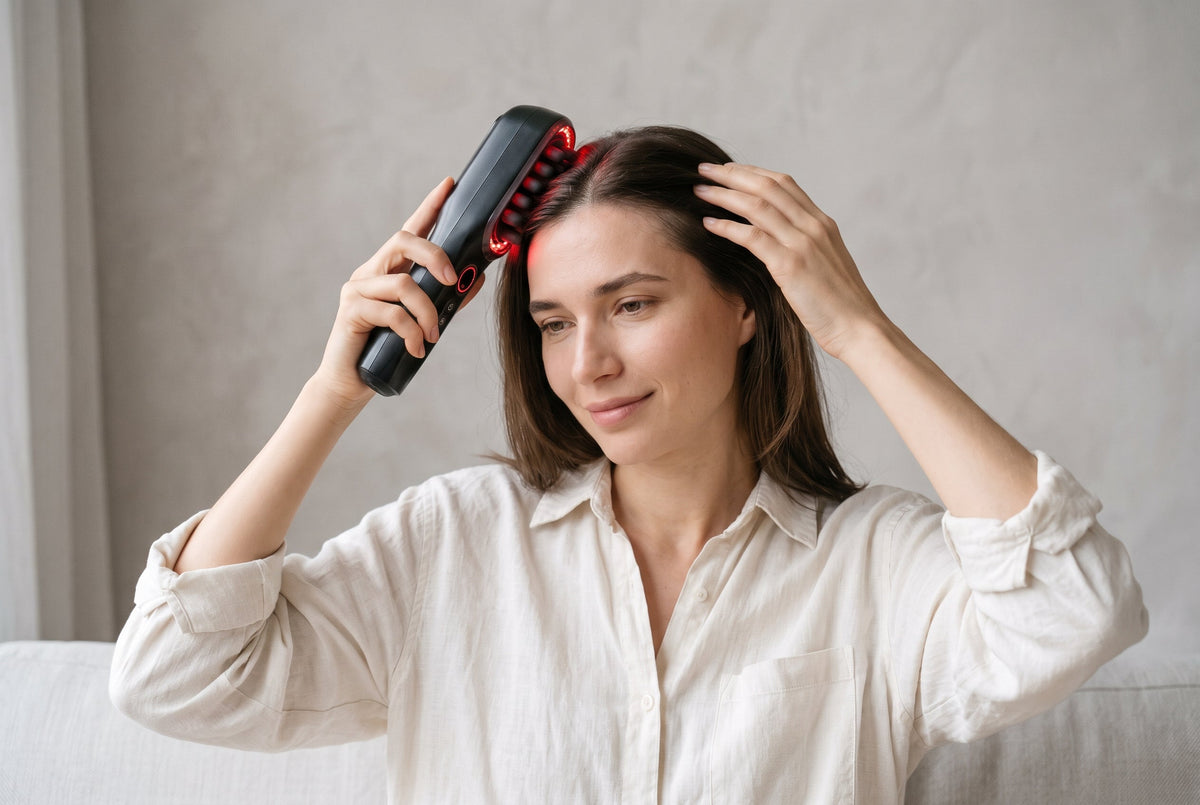
Place a manual brush lightly on the exposed area. For an electric massager, follow its placement and startup instructions. Check whether the contact points reach your scalp comfortably and whether nearby strands remain free. If the head rests mostly on hair, lift it away and adjust the part.
4. Keep Movement Small and Controlled
For a manual brush, use a small, gentle movement within the exposed area instead of sweeping across several sections. Let an electric model provide its intended motion, using the manufacturer’s recommended starting setting. Stop immediately if the movement draws hair into the head, pulls at the roots, or feels uncomfortable.
5. Lift Before Moving to Another Section
Follow any instructions to stop the device, then lift it clear before repositioning. Reopen the next part rather than dragging the tool through curls. Scalp massage for thick hair does not require reaching every spot in one session; leaving an awkward area alone is a reasonable choice.
If your curls are also long, lifting and repositioning a massager without tangling long hair addresses the separate challenge of keeping loose lengths away from the head.
Should You Use a Scalp Massager on Wet or Dry Curls?
Use it only in the conditions permitted for that specific tool. Some manual shampoo brushes are designed for use during washing. Electric scalp massagers vary, so silicone contact points or a cordless design should never be taken as permission to use a device in water.
Checking showering, rinsing, and charging limits separately helps you decide where a device can fit into wash day.
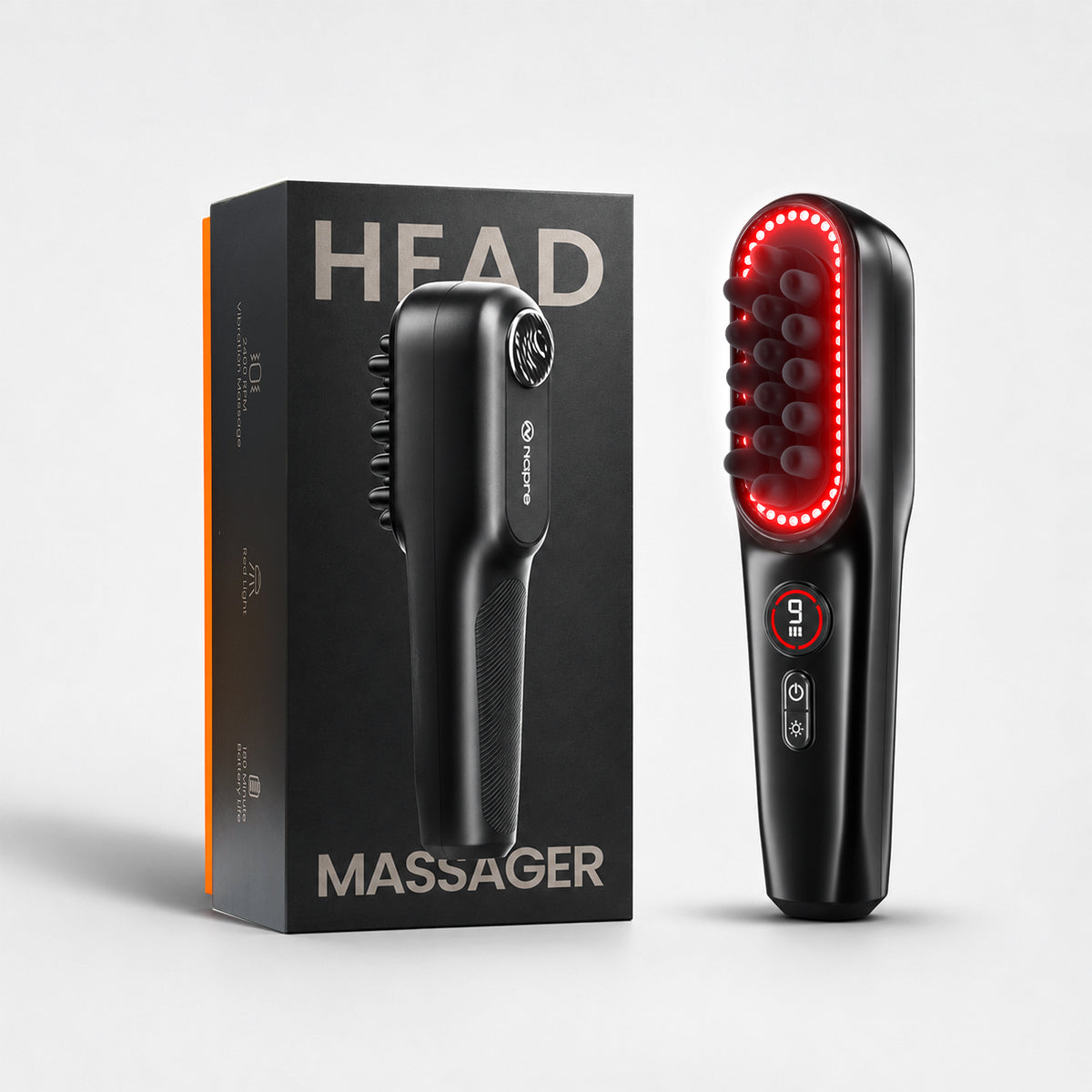
For example, the NAPRE NEH-101 product instructions specify a clean, dry scalp and dry hair. The device body is not waterproof: do not use it while bathing or showering, and do not rinse or immerse the body. The silicone massage head can be removed and washed separately; let it dry completely before refitting. A wet detangling routine must be completed separately before considering this dry-use device.
Choosing a scalp massager for Afro hair involves the same distinction: select a tool for the step you actually want to add. A brush for wash day and an electric device for a dry routine have different requirements, even when both are described as scalp massagers.
Can You Use a Scalp Massager Around Braids or Locs?
Only consider it where the scalp is comfortably accessible and the tool’s instructions allow use with your hairstyle. A visible part may still be too narrow for the massage head. Do not force tips beneath a braid, between tightly packed roots, or through an extension attachment.
When choosing a scalp massager for locs, consider the available space between roots and the movement the device creates. A product advertised as a scalp massager for dreadlocks still needs to pass those checks. A hair-type label does not establish compatibility with every loc size, stage, or installation.
- Accessible, comfortable part: Consider only light contact that leaves adjacent braids or locs undisturbed, if the tool’s instructions permit it.
- Narrow spaces or covered roots: Do not push a tool underneath the style. Fingertips may be easier to position, provided contact is comfortable.
- Starter locs or a fresh retwist: Ask your loctician about handling that could disturb the style. Skip the device if access is uncertain.
- Tight or painful roots: Pause massage and address the tension. More pressure is not a solution.
The AAD’s guidance on hairstyles that pull identifies tight braids, locs, and extensions as possible causes of traction alopecia. It also lists pain, stinging, and scalp crusting as warning signs. Massage does not correct a style that is placing excessive tension on the roots.

When Should You Stop or Skip Scalp Massage?
Stop if you notice pulling, pain, stinging, or irritation. Do not continue on sore or broken skin, or use stronger pressure to work through discomfort. If a section remains difficult to access after gentle repositioning, leave it alone.
A receding hairline, new patches of hair loss, or persistent scalp symptoms deserve assessment by a dermatologist. The AAD guidance above recommends seeking help when hair loss appears, because its cause needs to be identified. A massager should not delay that assessment.
Frequently Asked Questions
How can you reach the scalp through dense curls without pulling?
Open a small part with your fingertips and place the tool on the exposed scalp without pressing through the surrounding curls. Check contact before adding movement. If the head catches hair or cannot reach comfortably, lift it away, adjust the part, or skip that area.
Should curly or coily hair be sectioned before using a scalp massager?
Sectioning is helpful when curls prevent clear scalp access. Start with manageable areas and make them smaller if needed, without pulling the roots tight. There is no required number of sections. Detangle separately if knots prevent gentle parting, then meet the massager’s dry- or wet-use requirements.
Can a scalp massager be used around braids or locs?
Only where there is enough exposed, comfortable scalp for the tool and its instructions permit the hairstyle. Do not force the head under braids, around extension attachments, or between tight loc roots. If contact moves or pulls the style, use gentle fingertips where appropriate or skip massage.
Which brush features matter for dense curls?
Prioritize smooth, rounded tips, suitable spacing, a head that fits your accessible parts, and an easy-to-control grip. For a manual brush, assess tip flexibility as well as length. For an electric model, check its starting setting, motion, and hairstyle restrictions. Comfort matters more than maximum pressure.
Build Your Routine Around Comfortable Scalp Access
Start with one easy-to-reach part and assess how the tool fits before doing more. Choose manageable sections, gentle contact, and a device suited to your routine. For dense curls, braids, or locs, the useful question is whether you can reach the scalp comfortably without disturbing the surrounding hair.


Leave a comment
This site is protected by hCaptcha and the hCaptcha Privacy Policy and Terms of Service apply.