

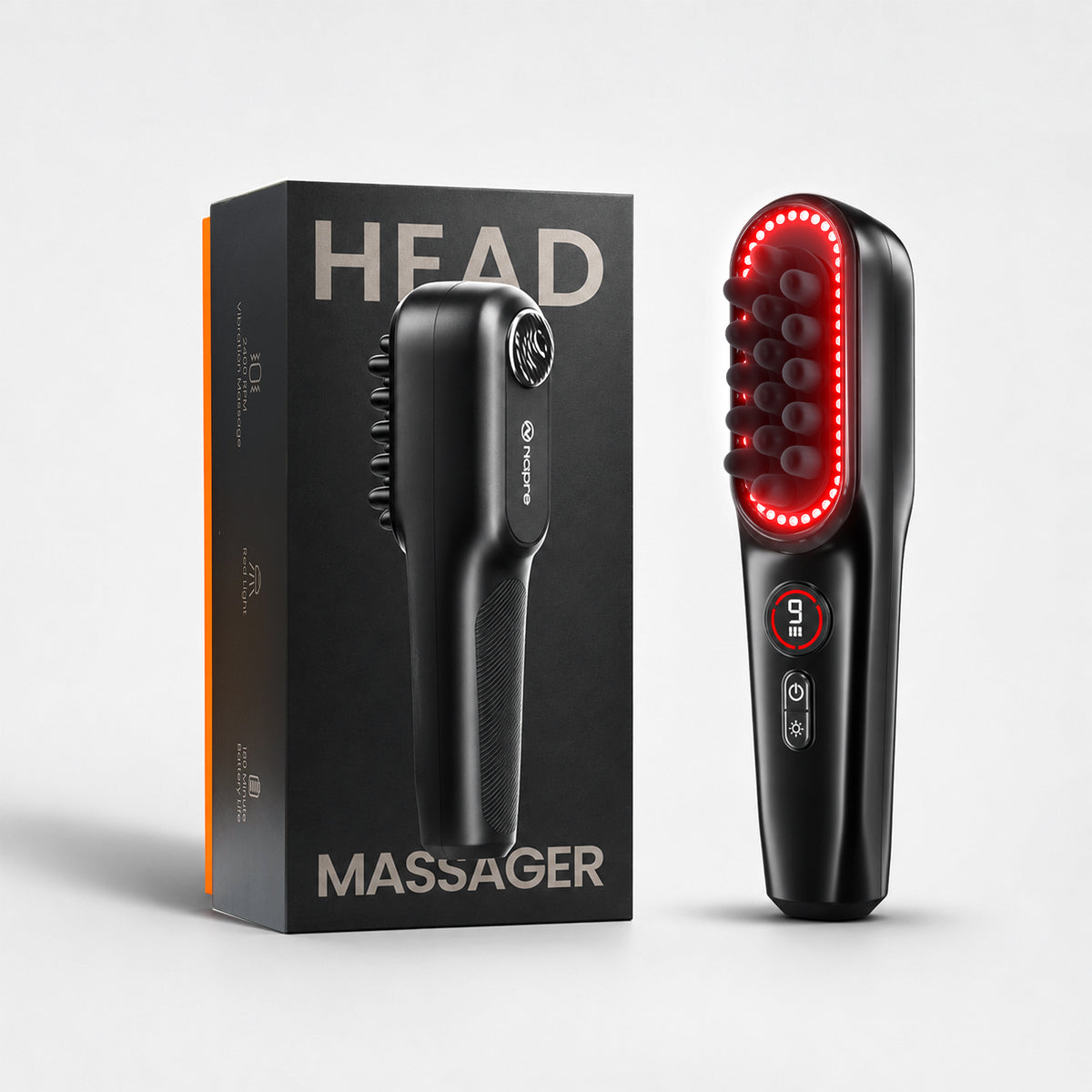
Scalp Massagers for Long Hair Without Tangling
A scalp massager for long hair is easier to control when you keep the lengths clear, work in small sections, and lift the tool before moving. Follow your model’s instructions for placement and use. If strands begin to pull or wrap around the head, stop instead of trying to push through.
Key Takeaways
- Keep the lengths clear: Part at the roots and loosely move the remaining hair away from the massage head.
- Lift before changing position: Release contact completely instead of sweeping the tool across the scalp or down your hair.
- Stop at the first catch: Turn off an electric device before attempting to free hair; never pull against resistance.
- Separate massage from detangling: Use appropriate conditioning and detangling tools for knots, and follow the massager’s dry- or wet-use instructions.
Why Can Long Hair Become Caught in a Scalp Massager?
Long strands have more length available to pass between tips, fold across the head, or loop around moving parts. A massager can catch those strands when it travels sideways while still in contact with hair. Existing knots can add resistance, making a small catch feel like a pull at the roots.
This can happen with straight, wavy, or curly long hair. Length creates a handling problem of its own: the free ends need to stay away from the working area. Curl pattern and density also affect access, but they do not change the need to keep loose lengths clear.
- Dragging between positions carries nearby strands along with the tool.
- Large hand-drawn circles can gather loose hair around a brush instead of keeping contact in one small area.
- Hair folded over the head may enter spaces between tips or moving components.
- Starting over an existing knot adds resistance that a scalp massager is not designed to remove.
If your scalp massager tangles hair, pause and review placement before changing speed or pressure. A different setting does not fix a strand that is already trapped. No technique can guarantee zero tangling with every device and hairstyle.
Set Up Your Hair and Tool Before You Start
Begin with hair that can be gently separated at the roots. Deal with existing knots using your usual detangling routine, then use the massager only when your hair meets that model’s instructions. Do not force a part through a knot or use massage tips as a comb.
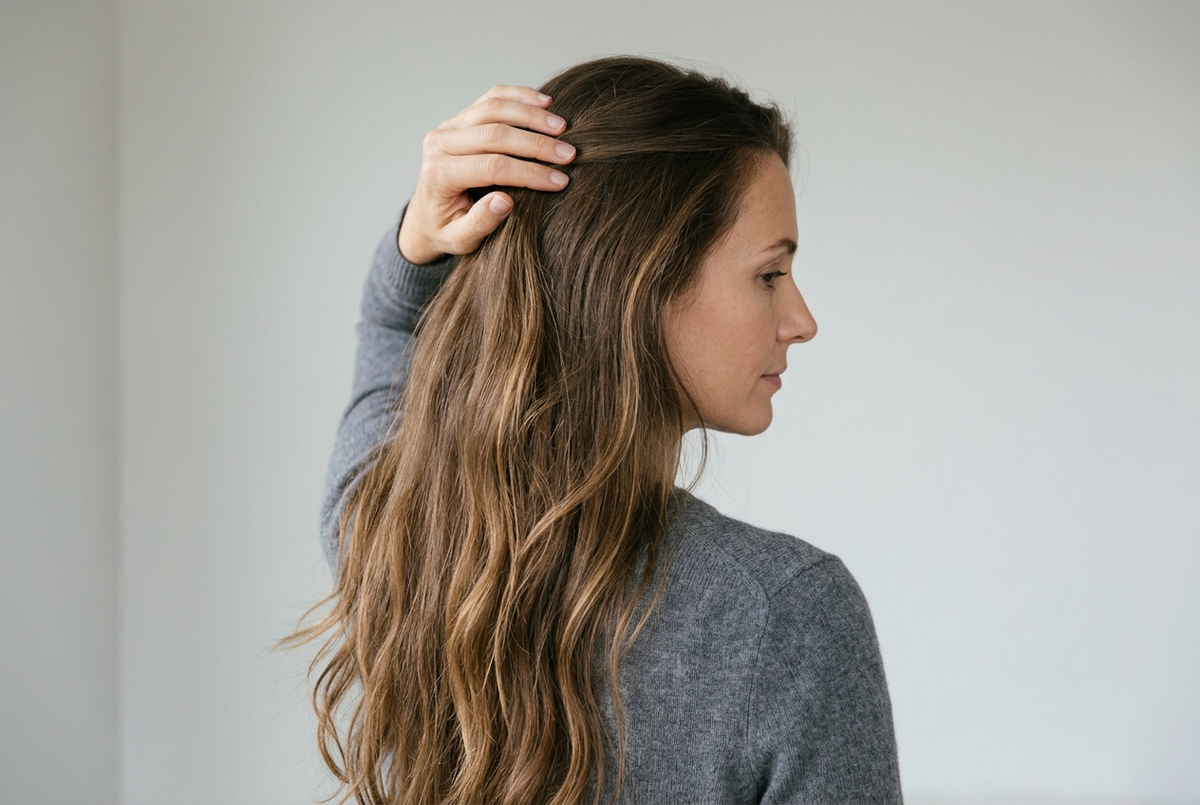
Loosely guide the lengths to one side or behind your shoulder, away from the area you will massage. A sectioning clip can help if it does not pull at the roots and sits outside the tool’s path. Avoid gathering everything into a tight ponytail simply to create access.
Check the head for trapped hair, rough edges, or damage before use. Clean it according to its instructions and do not use a damaged attachment. For guidance on movement, controls, and maintenance, see how to choose an electric scalp massager.
How to Use a Scalp Massager Without Tangling Hair
Use a place, massage, lift, reposition sequence. The important transition is lifting the head completely clear before moving sideways. Keep the free lengths out of the next contact area throughout. The following checks complement your tool’s instructions; they do not replace model-specific directions.
1. Make a Small, Manageable Part
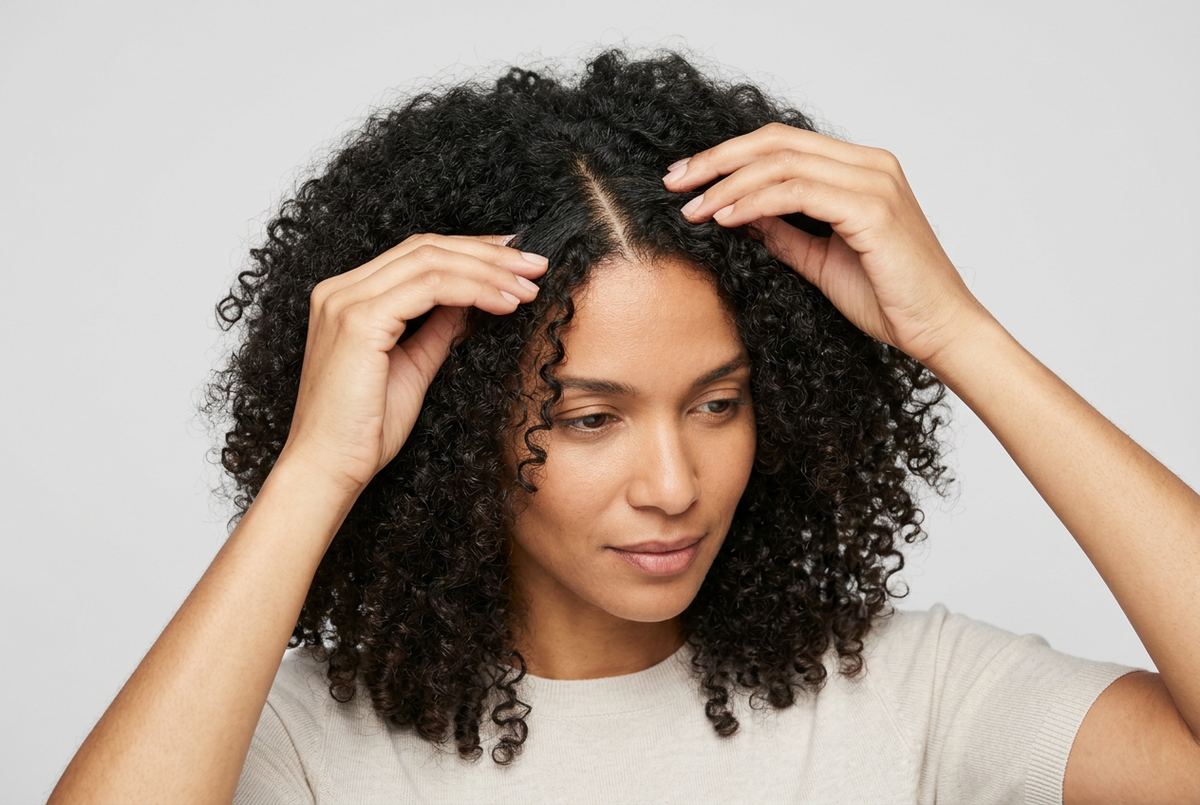
Separate a section with your fingers so you can reach the scalp without pushing through a bundle of hair. Hold the nearby lengths loosely to the side. Use smaller sections when you cannot see or feel where the head will sit, without pulling the hair taut.
2. Place the Head Without Sweeping
Lower a manual brush onto the exposed scalp with light contact. For an electric device, follow its startup and placement instructions. Check that long strands are not draped over the head or trapped beneath it. If the position feels crowded, lift away and adjust the section.
3. Keep the Massage in That Area
With a manual brush, use a small, controlled movement that stays inside the accessible section. For an electric model, let the device provide its intended motion; do not add wide circles with your hand. Stop if you feel a strand tightening or see hair gathering around the tips.
4. Lift Clear Before Moving Sideways
Pause the movement and follow any instructions to stop the device before repositioning. Gently raise the head away from the scalp until the tips are free of the hair. Check for resistance before moving to another area. If hair is caught, stop here and follow the release steps below.
5. Reset the Hair and Place Again
Open the next part, move the loose lengths aside, and place the head again. Do not drag from the crown toward the ends as though brushing your hair. It is fine to leave an awkward area alone rather than repeatedly working at a spot that catches.

Can a Shampoo Scalp Massager Tangle Long Hair?
Yes. A wet-use brush can still gather long strands if you scrub across a large area, pile the lengths onto the scalp, or drag the head through the hair. Shampoo lather does not prevent a physical catch. Keep the brush at the scalp and reposition it gently between sections.
Use a shampoo brush only if it is designed for that purpose. Wet-hair detangling advice does not establish that an electric device is waterproof. Follow the exact model’s restrictions on water, shampoo, oils, and cleaning; a silicone head or cordless design alone is not evidence of wet-use suitability.
Before bringing a powered tool into a washing routine, check its water-resistance and wet-use limits separately from its hair-handling instructions.
Dermatologist Hair-Care Advice at a Glance
These sources address hair handling and washing, rather than testing an anti-tangle massage technique. The practical applications below keep that distinction clear.
| Source and key advice | What this means for your routine |
|---|---|
|
AAD: Healthy hair tips Conditioner helps detangling; comb gently from the ends upward, with timing suited to your hair texture. |
Address knots as a separate hair-care step. Scalp massage does not replace conditioning or a suitable detangling tool, and wet detangling does not authorize wet use of a device. |
|
AAD: Habits that damage hair Gently massage shampoo into the scalp, avoid rubbing it into the lengths, and avoid pulling or tugging. |
Keep washing movements gentle at the scalp. With a permitted shampoo brush, avoid sweeping through the lengths; switch to fingertips if using the brush requires tugging. |
For straight hair, the AAD advises allowing some drying before combing; for thick, curly hair, it recommends detangling with conditioner before rinsing. Choose the appropriate hair-care routine first. If your massager requires dry hair, wait until the hair and scalp meet that requirement before using it.
What Should You Do if Hair Becomes Tangled Around a Tool?
Stop the movement immediately and do not pull the tool away. For an electric massager, switch it off before trying to release the strands. Support the tool so its weight does not hang from the trapped hair. Do not restart it to see whether the movement will unwind the tangle.
- Keep the tool still. Stop pressing, dragging, or twisting. Ask someone to help support it if the position is difficult to reach.
- Look for an easy release. With all motion stopped, gently free only loose, visible strands that lift away without pulling. Stop if the knot tightens or the scalp hurts.
- Follow the manufacturer’s removal instructions. Do not pry apart the device or detach a trapped powered head unless the instructions explicitly describe that procedure.
- Get help if it remains caught. Contact the manufacturer for model-specific guidance and seek help with the hair rather than continuing to tug. Scalp injury or persistent pain needs medical assessment.
Keep water, oils, and conditioner away from an electrical device unless its instructions explicitly allow them. After the tool is free, set it aside and handle remaining knots separately. Resume use only after you understand what caught the hair and can avoid repeating it.
Does Scalp Massage Make Long Hair Easier to Comb?
Scalp massage is not a detangling step. It works at the scalp, while knots may sit farther down the strands. If easier combing is your goal, appropriate conditioner, gentle handling, and a suitable comb address that task more directly than running a massager through the lengths.
Keep the two jobs separate: detangle the hair as needed, then massage only where you have comfortable scalp access. A session that repeatedly catches your hair is a reason to change the setup or stop using that tool, rather than increase force.
Frequently Asked Questions
Why can long hair become caught in a scalp massager?
Loose lengths can enter spaces between tips or loop around moving parts. Dragging the head between sections or making large circles can gather more hair into the working area. Existing knots add resistance. Keep the lengths clear, check placement, and stop as soon as a strand starts to tighten.
How do you lift and reposition a massager without dragging it through hair?
Pause the motion and stop the device if its instructions require it. Gently lift until the tips are completely clear, then move sideways. Open the next part before placing the head again. If there is resistance while lifting, treat it as a catch and stop rather than pulling through.
What should you do if hair becomes tangled around a tool?
Stop immediately, switch off an electric device, and support its weight. Free only loose strands that release easily, following the manufacturer’s instructions. Do not yank, keep the motor running, or improvise disassembly. If it will not release without force, get help; seek medical assessment for injury or persistent pain.
A Gentler Routine for Long Hair
Keep the working area small, the loose lengths clear, and each repositioning deliberate. A scalp massager should contact your scalp without becoming a tool for pulling through the hair. Explore more NAPRE scalp-care guides when you are ready to build the rest of your routine.


Leave a comment
This site is protected by hCaptcha and the hCaptcha Privacy Policy and Terms of Service apply.